Learn with Frank Anderson & Jan Winhall

This event covers Polyvagal Theory and IFS, highlighting where they may overlap or differ in your practice. Across three 90‑minute sessions, participants will examine overlapping principles, explore how protective parts and survival states influence trauma and addiction, and learn how to combine compassionate parts‑work with nervous‑system regulation to support healing from trauma.
Frank Anderson and Jan Winhall

Community

  • Full access to the webinar series and all event recordings for 365 days

Free

Supporter

  • Full access to the webinar series and all event recordings for 365 days

  • Help cover our costs as a non-profit to produce this event

  • Align with our mission as an international organization in creating a safe and connected world

$40

Impact

  • Full access to the webinar series and all event recordings for 365 days

  • Help cover our costs as a non-profit to produce this event

  • Align with our mission as an international organization in creating a safe and connected world

  • Support the funding of scholarships for those without financial resources to study at PVI

$80

Key Takeaways for Learners
PVT & IFS Overview & Correlation

In this first session, we'll discuss PVT and IFS, walking through how to integrate the two into your practice, identifying where they overlap and how they differ.

Trauma & Addiction

In our second session, we'll highlight protector parts and survival states through an integrated IFS & PVT lens, allowing us to move away from pathologizing & towards compassion.

Healing

Finally, we'll focus on healing trauma, using unburdening steps from IFS and nervous system relational safety concepts from PVT.

Timing

All sessions will include a Q&A with the instructors.

All sessions will run for 90 minutes, from 12 to 1:30 pm EST
Time zone conversion

Monday, January 12 | Session One: Overview of PVT & IFS

Tuesday, January 13 | Session Two: Survival Strategies

Friday, January 16 | Session Three: Healing Trauma

Description

Internal Family Systems is a therapeutic approach that helps us to recognize the distinct “parts” within ourselves, and to understand how these parts shape thoughts, emotions, and behavior. It is grounded in the belief that each person has a core Self that is steady, compassionate, and able to guide the internal system with clarity. 

Through engaging with protective parts and the more vulnerable parts they support, individuals can cultivate healthier inner relationships and move toward meaningful healing. This model offers a thoughtful and supportive pathway for deepening self-awareness and strengthening emotional well-being. 

This event unites the expertise of Frank Anderson, MD, and Jan Winhall, MSW — two recognized leaders in trauma‑informed care — in a three‑part webinar series exploring how Polyvagal Theory and Internal Family Systems intersect and complement each other in clinical practice.

Across three 90‑minute sessions, participants will examine overlapping principles, explore how protective parts and survival states influence trauma and addiction, and learn how to combine compassionate parts‑work with nervous‑system regulation to support healing from trauma. 

Each session concludes with an opportunity for live Q&A, and materials and recordings will remain available for a full year.

Extra Details

Learners will have access to course materials for 365 days.

  • Webinar sessions will be hosted on Zoom.

  • Recordings of each session will be available within a week of the series' completion.

Meet Your Instructors

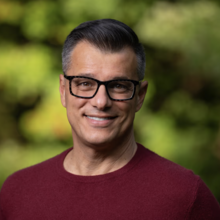
MD Frank Anderson

Frank Anderson, MD, is a world-renowned trauma expert, Harvard-trained psychiatrist and global speaker. He is the co-author of the IFS Skills Training Manual (2017), acclaimed best-selling author of Transcending Trauma (2021) and newly released memoir, To Be Loved: A Story of Truth, Trauma and Transformation (2024). Dr Anderson has a long affiliation with Bessel van der Kolk and is on the board at the Trauma Research Foundation. A former Lead Trainer with the IFS Institute, Dr. Anderson is also a member of the Clinical Advisory Board with Unyte Health. He is passionate about teaching brain-based psychotherapy and integrating current neuroscience knowledge with cutting edge models of therapy. Dr. Anderson believes that traumatic events can have a lasting effect on the health and well- being of individuals and that addressing these events will help lead people down a path of love, connection and unity. He is the director and cofounder of the Trauma Institute (traumainstitute.com) and Trauma-Informed Media (trauma-informedmedia.com), organizations that provide educational resources and promote trauma awareness. As a result of his early childhood experiences and personal journey transformation, he is dedicated to bringing more trauma healing to the world. He resides in Los Angeles with his husband and two sons. Follow him at FrankAndersonMD.com and on Instagram at frank_andersonmd.

Jan Winhall

Jan Winhall, M.S.W. F.O.T. is an author, teacher and psychotherapist. She is an adjunct lecturer and practicum supervisor in the Department of Social Work, University of Toronto. Jan is director of Focusing on Borden, a psychotherapy and training center. She has built a community of people who teach and practice Focusing as a way of life. Jan presents internationally on trauma and addiction. Her book, "Treating Addiction with The Felt Sense Polyvagal Model: A Bottom Up Approach" is the result of rethinking the Felt Sense Experience Model that she wrote about in Emerging Practice in Focusing- Oriented Psychotherapy, 2014. Her most recent book is "20 Embodied Practices for Healing Trauma and Addiction Using the Felt Sense Polyvagal Model". "Reframing addiction and its treatment through the lens of Experiential Psychotherapy, Polyvagal Theory, Interpersonal Neurobiology and Imago Relationship Therapy, Jan Winhall has produced a brilliant synthesis and expansion of addiction theory and treatment that should be read by all therapists, not just addiction specialists." ―Harville Hendrix, PhD, and Helen LaKelly Hunt, PhD, authors of Doing Imago Relationship Therapy in the Space Between "In this insightful volume Jan Winhall brings together the essence of groundbreaking modern therapeutic practices with her own decades of hard-won clinical experience to fashion a new, deeply humane and promising model of addiction treatment, illustrated by poignant clinical vignettes." ― Gabor Maté, MD, is the author of In the Realm of Hungry Ghosts: Close Encounters with Addiction. "In Treating Trauma and Addiction with the Felt Sense Polyvagal Model Jan Winhall introduces a new strategy to treat addiction that brilliantly integrates Gendlin’s classic concept of a felt sense with Polyvagal Theory. The author shares her intellectual journey in which unique insights transform two disparate perspectives into obvious complements leading to a powerful treatment model." ―Stephen W. Porges, PhD, scientist, author, creator of Polyvagal Theory